
Tomato Cold Storage: Sprout Control Principles for Vegetable Cold Storage Rooms
This guide explains tomato cold storage principles, sprout control methods, and how vegetable cold storage rooms differ for potatoes, onions, and garlic from hengliang cooling.
COLD ROOMS
1/12/20262 min read
Introduction: Why Potato Cold Storage Is Often Misunderstood
In post-harvest handling, potato cold storage is frequently misunderstood as a form of “ripening management.”
In reality, potatoes are tuber crops, not fruits. Their edible portion is an underground stem, meaning potatoes do not undergo post-harvest ripening like climacteric fruits such as bananas or tomatoes.
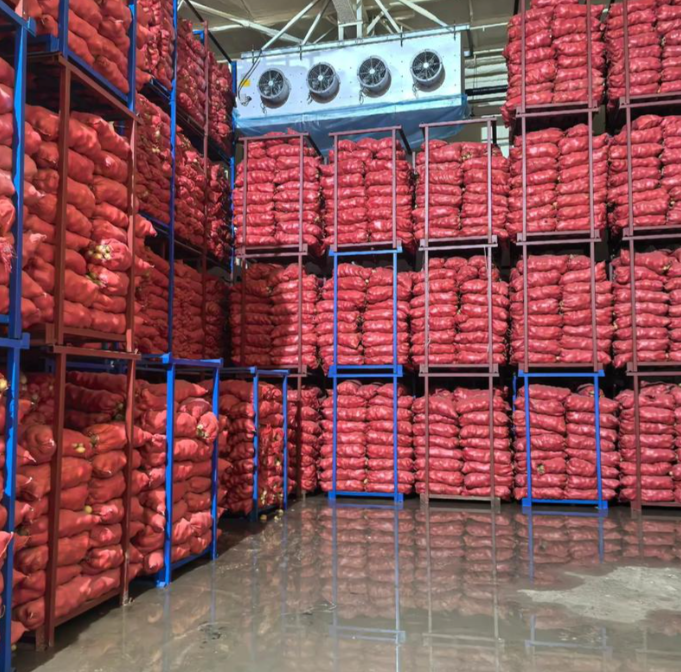
As a result, professional potato storage focuses on sprout inhibition and quality preservation, not ripening or color development. This distinction is critical when designing a vegetable cold storage room for potatoes.
How Potato Cold Storage Systems Work
Storage Logic: Dormancy Management, Not Ripening
After harvest, potatoes naturally enter a dormant phase. Potato cold storage systems are designed to:
Slow metabolic activity
Delay sprout initiation
Prevent moisture loss and decay
Unlike fruit storage systems, ethylene injection or ripening rooms are not required for potatoes. Instead, storage performance depends on precise control of temperature, darkness, humidity, and ventilation.
Potato Cold Storage Conditions Explained
Recommended Storage Parameters
Storage temperature: 4–7°C
Relative humidity: 85–95%
Light: Complete darkness
Air circulation: Uniform, low-velocity airflow
Temperatures that are too high may trigger sprouting, while excessively low temperatures may lead to quality degradation, including texture changes and sugar accumulation.
Sprouting in Potatoes: Promotion vs Suppression
When Sprouting Is Promoted (Seed Potatoes)
Sprout promotion is used primarily for seed potatoes, not for consumption.
Typical sprout stimulation methods include:
Storage at 15–20°C
Controlled humidity
Diffused light exposure
Ethylene exposure from nearby fruit (e.g. apples)
Chemical dormancy breakers such as gibberellic acid (professional use only)
⚠ Sprouted potatoes may accumulate solanine, a natural toxin. For food safety, sprouted table potatoes should be avoided or carefully trimmed and cooked.
Sprout Suppression: The Core Objective of Commercial Potato Cold Storage
For commercial potato storage, the goal is sprout inhibition.
Common sprout suppression strategies include:
Low-temperature storage (4–7°C)
Complete light exclusion
Stable humidity control
Ventilation management
Ethylene absorption or regulation in industrial systems
This approach allows potatoes to be stored for extended periods without quality loss.
Core Features of a Potato Cold Storage Room
1. Temperature Stability
Prevents premature sprouting
Minimizes physiological stress
2. Darkness Control
Avoids greening and chlorophyll formation
Reduces solanine risk
3. Humidity Regulation
Prevents dehydration
Maintains tuber firmness
4. Ventilation Design
Removes excess moisture and heat
Reduces rot development
hengliangcooling designs potato cold storage systems based on these principles, ensuring stable long-term storage through customized room layout and refrigeration integration.
Potato vs Onion vs Garlic: Storage Logic Comparison (Featured Snippet Friendly)
Although potatoes, onions, and garlic are all classified as vegetables, their storage requirements differ significantly.
Key Differences in Storage Logic
Potatoes require sprout inhibition through low temperature and darkness.
Onions require dry conditions to prevent sprouting and fungal growth.
Garlic requires very low humidity and strong ventilation to maintain bulb integrity.
Storage Parameter Comparison
This comparison highlights why a vegetable cold storage room must be crop-specific, rather than a one-size-fits-all solution.
Typical Applications of Potato Cold Storage
Table potato storage for wholesalers
Processing potato supply buffering
Seed potato dormancy management
Seasonal inventory control
With extensive experience in vegetable storage projects, hengliangcooling supports potato, onion, and garlic storage facilities with tailored system configurations.
Professional Hengliang Cooling
Designing a reliable potato cold storage system requires a clear understanding of dormancy control, food safety, and crop-specific storage logic.
hengliangcooling provides professional vegetable cold storage room solutions, offering customized design, refrigeration system integration, and full project execution for potato, onion, and garlic storage projects.
Contact hengliangcooling to discuss your storage requirements and receive a tailored technical solution.
HENGLIANG COOLING
We design, manufacture, and deliver integrated refrigeration solutions, including cold rooms, ripening room systems, and industrial chillers for global commercial and industrial applications.
SERVICES
Request a Customized Solution
© 2002-2026. All rights reserved.
Address
Xiamen, Fujian, China
Contacts
+86 18350573206
alan@xhllq.com