
How to Choose the Right Chiller Based on Water Flow Rate
Learn how to select the right chiller based on water flow rate, cooling capacity, temperature difference, and system design. A practical guide for industrial cooling applications.
INDUSTRY CHILLER
4/20/20265 min read
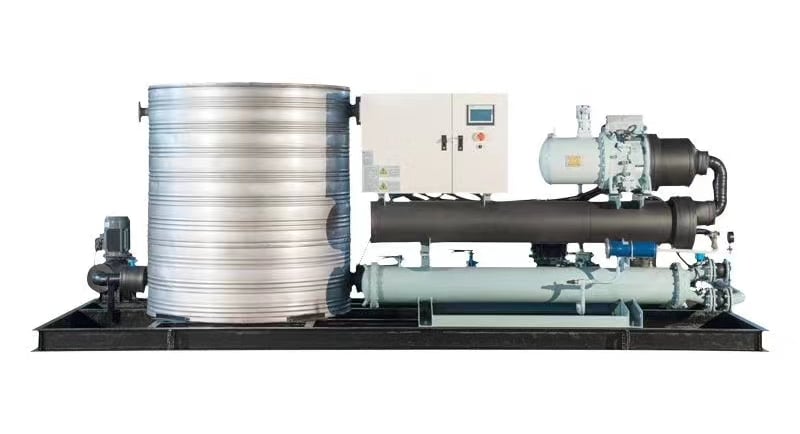
How to Choose the Right Chiller Based on Water Flow Rate
Introduction
Selecting the right chiller is one of the most important steps in designing an efficient cooling system. In industrial production, laboratory cooling, plastic processing, laser equipment, and HVAC applications, water flow rate is a key factor that directly affects cooling performance, energy consumption, and system stability.
A properly selected chiller must match not only the required cooling capacity, but also the actual water flow demand of the process. If the flow rate is too low, the system may suffer from insufficient heat transfer and frequent alarms. If the flow rate is too high, it may increase pumping energy and operating costs unnecessarily.
In this guide, we explain how water flow rate relates to chiller capacity, how to calculate the required flow, and how to choose the most suitable chiller type for different application scenarios.
Why Water Flow Rate Matters in Chiller Selection
Water flow rate is closely connected to the amount of heat that a chiller needs to remove from a system. In practical terms, the larger the heat load, the higher the required flow rate if the temperature difference remains the same.
When selecting a chiller, engineers usually evaluate four key factors:
1. Cooling Capacity
Cooling capacity determines how much heat must be removed from the process.
2. Inlet and Outlet Water Temperature
The temperature difference between supply water and return water has a direct impact on the flow requirement.
3. Pump Capacity and Pressure Loss
The system must provide enough flow and pressure to overcome pipe resistance, heat exchanger resistance, valves, and filters.
4. Fluid Type and Water Quality
Clean water, glycol mixtures, and seawater systems all require different design considerations.
Basic Formula for Calculating Chiller Water Flow
The most commonly used formula for estimating chilled water flow is:
Water Flow (m³/h) = Cooling Capacity (kW) × 0.86 / ΔT
Where:
Cooling Capacity = required refrigeration load in kW
ΔT = temperature difference between inlet and outlet water in °C
Example Calculation
If a chiller has a cooling capacity of 100 kW and the design temperature difference is 5°C, the required water flow is:
100 × 0.86 / 5 = 17.2 m³/h
This means the system should be designed to provide approximately 17.2 cubic meters of water per hour.
Important Notes
A smaller temperature difference requires a higher flow rate
Precision cooling systems often use a 2–3°C temperature difference
Standard industrial cooling systems often use 5°C
Hard water conditions may require additional design margin to compensate for scale formation
Long piping systems increase pressure drop and must be considered during system design
How to Choose a Chiller for Different Flow Rate Ranges
Small Flow Applications: Less Than 10 m³/h
Small flow systems are usually found in:
laboratory equipment
laser machines
compact injection molding machines
small process cooling lines
For these applications, a compact air-cooled chiller or scroll chiller is often the best solution. These units are easier to install, require less space, and are suitable for low to medium heat loads.
Recommended features:
compact design
stable temperature control
variable speed pump option
easy maintenance
Medium Flow Applications: 10 to 50 m³/h
Medium flow systems are commonly used in:
plastic processing plants
food processing lines
pharmaceutical equipment
general industrial manufacturing
For this range, modular water-cooled chillers or screw chillers are often preferred. These systems offer higher efficiency, better expansion capability, and more stable performance under varying loads.
Recommended features:
modular expansion
PLC or intelligent control
high efficiency heat exchangers
optional heat recovery design
Large Flow Applications: Above 50 m³/h
Large flow systems are typically used in:
large factories
central process cooling plants
data centers
chemical and semiconductor facilities
In these cases, industrial water-cooled screw chillers or centrifugal chillers are more suitable. A secondary pump system is often recommended to improve hydraulic balance and reduce energy waste.
Recommended features:
high-capacity design
secondary pumping system
advanced monitoring and control
integrated water treatment support
How to Match the Chiller with Pump and Piping System
Choosing the chiller is only part of the process. The pump and piping system must also be matched correctly.
Measure or Estimate Actual Flow
Flow can be checked using:
ultrasonic flow meters
differential pressure instruments
system design calculations
Calculate Pump Head
Pump head must account for:
pipe friction loss
evaporator resistance
filter resistance
valve resistance
elevation difference, if any
A pump that is too small will lead to insufficient flow alarms. A pump that is too large will cause unnecessary power consumption and possible system instability.
Consider Pipe Diameter and Flow Velocity
Proper pipe sizing is important to reduce pressure loss and maintain stable operation. Oversized or undersized piping can both reduce system efficiency.
Common Problems Caused by Incorrect Water Flow
Low Flow Alarm
Possible reasons:
blocked Y-strainer or filter
incorrect pump rotation
pump failure
pipe blockage
valve not fully open
Large Flow Fluctuation
Possible reasons:
unstable pressure in the water loop
poor valve control
inadequate expansion or buffer tank design
Reduced Heat Exchange Efficiency
Possible reasons:
scaling inside the heat exchanger
dirty water quality
mismatch between design flow and actual operating flow
Special Considerations for Different Fluids
Glycol Solutions
When glycol is used for low-temperature applications, viscosity increases and heat transfer performance changes. In many cases, the system will require a higher flow rate compared with pure water.
Seawater or Corrosive Media
For seawater cooling or corrosive liquids, the heat exchanger material should be selected carefully. Titanium or other corrosion-resistant materials are often necessary.
Hard Water Conditions
If water hardness is high, scaling can reduce heat transfer efficiency. Proper water treatment and design margin should be included.
Energy Efficiency Tips for Better Chiller Performance
Use Variable Frequency Drives
Variable speed pumps can reduce power consumption significantly during part-load operation.
Optimize Flow Based on Actual Load
Instead of running the system at full flow all the time, intelligent controls can adjust flow according to real cooling demand.
Integrate Chiller, Pump, and Cooling Tower Controls
A well-integrated control system improves overall system efficiency and avoids unnecessary energy waste.
Perform System Simulation for Large Projects
For complex industrial systems, hydraulic simulation and energy modeling can help ensure better flow distribution and more accurate equipment selection.
Step-by-Step Chiller Selection Process Based on Water Flow
Step 1
Determine the total cooling load in kW.
Step 2
Confirm the required inlet and outlet water temperature.
Step 3
Calculate the theoretical flow rate using the formula:
Flow = Cooling Capacity × 0.86 / ΔT
Step 4
Review piping layout, pressure loss, and pump head requirements.
Step 5
Choose the suitable chiller type:
air-cooled chiller
water-cooled chiller
screw chiller
centrifugal chiller
Step 6
Add auxiliary equipment if needed:
water tank
pump
filters
water treatment system
control system
Step 7
Evaluate energy efficiency and long-term operating cost.
Conclusion
Choosing the right chiller based on water flow rate is essential for achieving reliable cooling performance, stable operation, and lower energy consumption. By understanding the relationship between cooling capacity, temperature difference, and flow rate, users can avoid oversizing or undersizing their systems and improve overall efficiency.
Whether your application involves a small process machine or a large industrial cooling system, accurate flow calculation and correct equipment matching will help you get the best results.
If you are planning a new project or upgrading an existing cooling system, it is always recommended to work with an experienced chiller manufacturer that can evaluate both your thermal load and hydraulic conditions.
FAQ
What is the formula for chiller water flow rate?
The common formula is:
Water Flow (m³/h) = Cooling Capacity (kW) × 0.86 / ΔT
What happens if chiller water flow is too low?
Low flow can cause insufficient heat transfer, unstable temperature control, and frequent system alarms.
Which chiller is best for high flow applications?
For large industrial systems, water-cooled screw chillers or centrifugal chillers are usually better choices.
Does glycol affect the required flow rate?
Yes. Glycol changes fluid properties, so the required flow rate and pump selection often need adjustment.
HENGLIANG COOLING
We design, manufacture, and deliver integrated refrigeration solutions, including cold rooms, ripening room systems, and industrial chillers for global commercial and industrial applications.
SERVICES
Request a Customized Solution
© 2002-2026. All rights reserved.
Address
Xiamen, Fujian, China
Contacts
+86 18350573206
alan@xhllq.com