
Banana Fruit Cold Storage Room: Temperature & Ripening Guide
This industry guide explains banana cold storage systems, covering banana cold storage temperature, fruit cold storage room design, and controlled ripening processes.
BANANA RIPENING ROOM
1/12/20263 min read
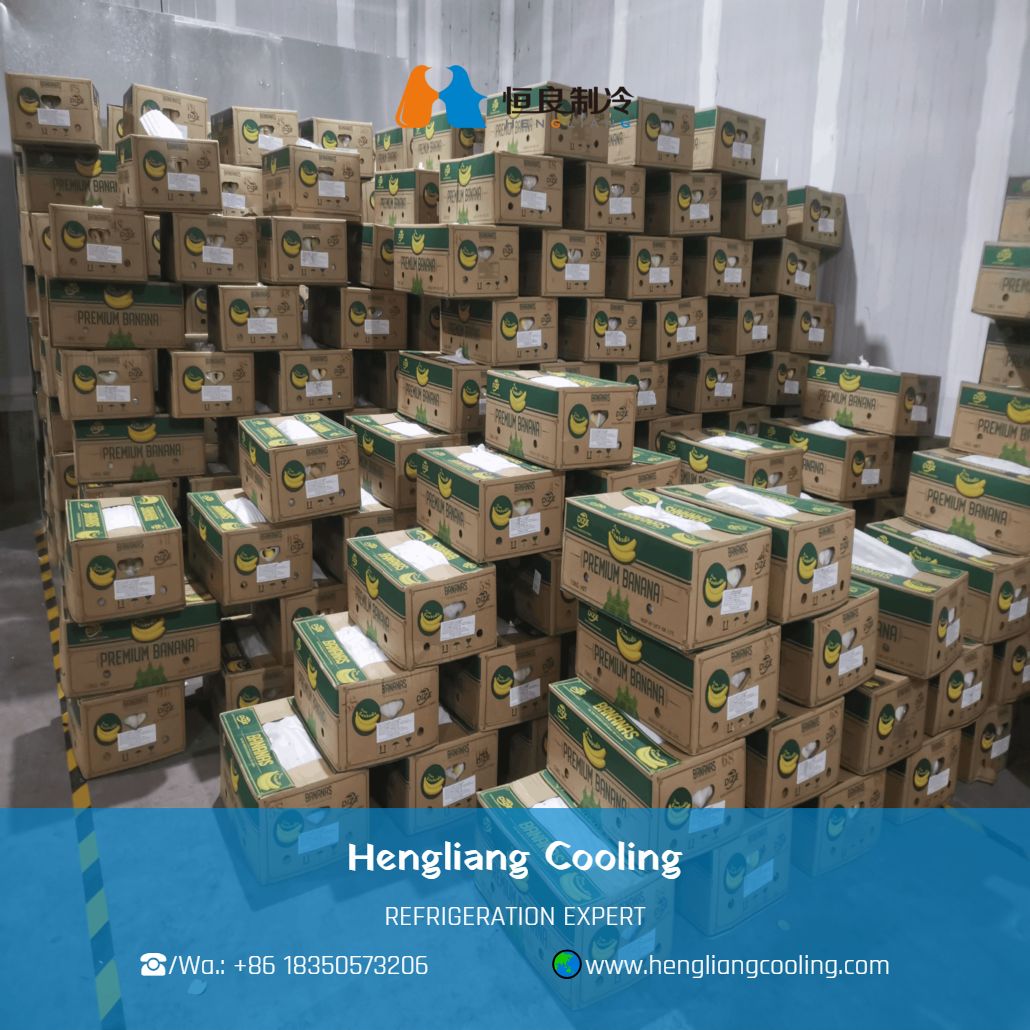
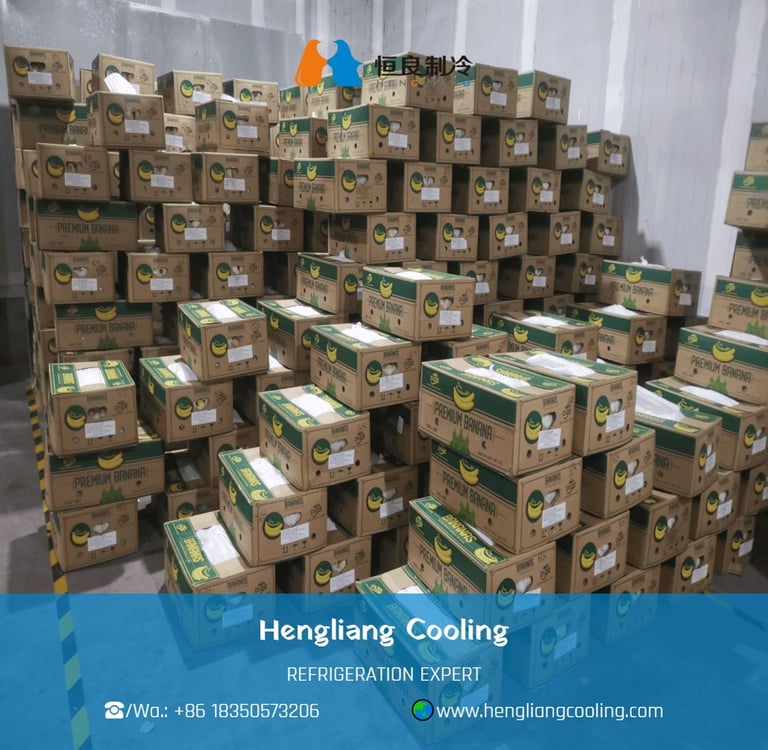
Introduction: Why Bananas Require Specialized Cold Storage and Ripening Systems
Bananas are climacteric fruits, meaning they continue to ripen after harvest. Improper temperature or gas control during storage can cause chilling injury, uneven ripening, excessive weight loss, or premature spoilage.
A professional banana cold storage system is therefore not limited to preservation. It must support a complete post-harvest process, including:
Green banana storage
Temperature-controlled transport buffering
Ethylene-based ripening control
For importers, distributors, and ripening centers, a well-designed fruit cold storage room combined with a dedicated ripening room is essential to ensure quality, shelf life, and commercial consistency.
How Banana Cold Storage Systems Work
From Heat Removal to Physiological Control
Banana cold storage is based on moderate-temperature refrigeration, not deep chilling. The system removes field heat while preventing chilling injury and respiration stress.
Key functional layers include:
Temperature regulation
Humidity control
Air circulation
Gas management (for ripening)
Unlike generic fruit storage, banana systems must remain adaptable across different stages of maturity.
Banana Cold Storage Temperature Explained
Recommended Temperature Ranges
Green banana storage: 13–14°C
Short-term holding: 14–15°C
Ripening preparation: 15–18°C
Temperatures below 12°C can cause chilling injury, leading to gray pulp, peel browning, and failure to ripen properly.
Maintaining a stable banana cold storage temperature is more critical than rapid cooling.
Humidity Control
Recommended RH: 85–95%
Prevents peel dehydration and weight loss
Supports uniform ripening later
From Storage to Ripening: The Banana Ripening Process
What Is a Banana Ripening Room?
A banana ripening room is a sealed, temperature-controlled chamber where ethylene gas is introduced to trigger and control the ripening process.
Key control elements include:
Ethylene injection system
Precise temperature ramp-up
Fresh air exchange and CO₂ exhaust
Ripening cycle automation
Typical Ripening Parameters
Temperature: 16–18°C
Ethylene concentration: 100–150 ppm
Ripening duration: 4–7 days (depending on variety and market requirement)
A professional banana ripening room is usually integrated with upstream banana cold storage rooms within the same facility.
Core Features of a Commercial Banana Cold Storage Solution
1. Insulated Fruit Cold Storage Room Structure
PU or PIR insulation panels
Typical thickness: 100 mm
Airtight design for gas control
2. Precision Refrigeration System
Medium-temperature condensing units
Even airflow evaporators
Stable temperature recovery after door opening
3. Humidity & Airflow Optimization
Low-velocity airflow
Condensation control
Moisture retention for peel quality
4. Ripening Control System (Optional)
Ethylene generators or cylinders
PLC-based ripening programs
Gas safety and ventilation logic
As a professional solution provider, hengliangcooling integrates cold storage rooms and ripening systems into a unified post-harvest workflow rather than treating them as isolated rooms.
Typical Configuration: Banana Storage + Ripening Facility
A commercial banana cold storage and ripening facility usually includes:
Green banana cold storage rooms
Dedicated banana ripening rooms
Central refrigeration plant or split systems
Ethylene supply and monitoring system
Digital temperature and gas control
System sizing depends on daily carton throughput, ripening batch size, pallet layout, and market distribution speed.
Key Technical Parameters (Reference)
Main Application Scenarios
Banana Importers & Ripening Centers
Green banana holding
Market-specific ripening programs
Wholesale Fruit Distribution Hubs
Multi-fruit cold storage rooms
Integrated banana ripening zones
Supermarket Supply Chains
Central ripening facilities
Regional cold chain distribution
Export & Port Logistics Facilities
Buffer storage before ripening
Temperature-controlled turnover
hengliangcooling has experience delivering banana cold storage and ripening room projects for these applications, adapting designs to local climate conditions and operational rhythms.
FAQ: Banana Cold Storage & Ripening
What is the ideal banana cold storage temperature?
Green bananas are best stored at 13–14°C to avoid chilling injury and premature ripening.
Can bananas be stored with other fruits?
Only with compatible fruits. Ethylene-sensitive fruits should be separated.
How long does banana ripening take?
Typically 4–7 days, depending on temperature, ethylene concentration, and target ripeness.
Is a ripening room different from a cold room?
Yes. Ripening rooms require gas-tight construction, ethylene control, and precise ventilation, beyond standard refrigeration.
Professional Hengliang Cooling
Designing an effective banana cold storage and ripening system requires a clear understanding of fruit physiology, temperature sensitivity, and post-harvest workflows.
hengliangcooling provides professional banana cold storage and fruit ripening solutions, offering customized system design, refrigeration integration, and full project execution support.
Contact the hengliangcooling technical team to discuss your banana storage and ripening requirements and receive a tailored technical proposal and quotation.
HENGLIANG COOLING
We design, manufacture, and deliver integrated refrigeration solutions, including cold rooms, ripening room systems, and industrial chillers for global commercial and industrial applications.
SERVICES
Request a Customized Solution
© 2002-2026. All rights reserved.
Address
Xiamen, Fujian, China
Contacts
+86 18350573206
alan@xhllq.com