
Cold Room Design Guide: How to Build a Cold Room for Commercial Storage
Learn what a cold room is, how cold room design works, and how to build a cold room step by step for food, meat, fish, fruit, and industrial storage applications.
COLD ROOMS
11/9/20252 min read
A cold room is a temperature-controlled storage space essential for food processing, logistics, agriculture, and pharmaceutical industries. A well-planned cold room design ensures product safety, energy efficiency, and long-term operational stability. This guide explains what a cold room is and clearly outlines how to build a cold room step by step.
What Is a Cold Room?
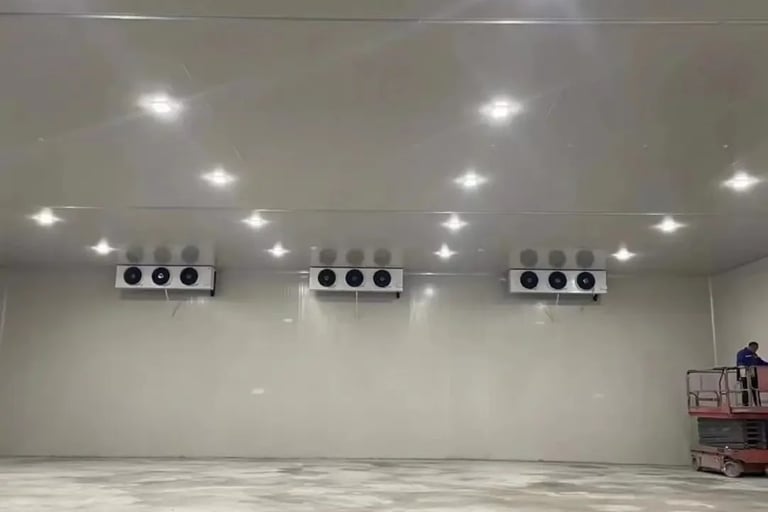
A cold room is an insulated enclosure equipped with a refrigeration system designed to maintain a consistent temperature for perishable products such as meat, seafood, fruit, vegetables, and dairy. Depending on the application, cold rooms can operate from above-freezing to deep-freeze conditions.
Key Factors in Cold Room Design
Effective cold room design balances temperature requirements, insulation performance, refrigeration capacity, and internal layout. Each factor directly affects storage quality and operating costs.
Temperature Requirements by Product Type
Insulation and Panel Selection
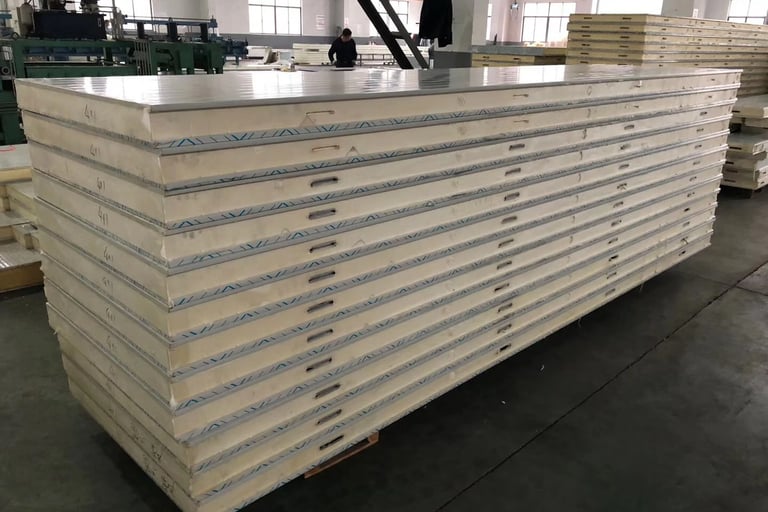
High-density PU or PIR insulation panels are critical to reduce heat transfer and maintain temperature stability. Panel thickness varies based on target temperature and room size.
Refrigeration System Configuration
A cold room refrigeration system typically consists of a condensing unit, evaporator, and intelligent control system. Proper equipment matching ensures stable cooling performance and reduced energy consumption.
How to Build a Cold Room: Step-by-Step Process
Step 1: Define Storage Requirements
Identify product type, daily loading volume, and required temperature range to determine cold room capacity.
Step 2: Plan Cold Room Layout
A professional cold room design includes airflow planning, shelving layout, door positioning, and access efficiency.
Step 3: Install Insulated Panels
Panels are assembled with airtight cam-lock systems to prevent thermal leakage and condensation.
Step 4: Install Refrigeration Equipment
Refrigeration units are installed and commissioned according to cooling load calculations and environmental conditions.
Step 5: Testing and Commissioning
System testing includes temperature pull-down, defrost cycles, and operational safety checks.
Common Cold Room Applications
Cold rooms are widely applied in:
Food processing plants and logistics centers
Meat and poultry cold storage
Seafood and frozen food storage
Fruit, vegetable, and dairy preservation
Frequently Asked Questions About Cold Rooms
What is the difference between a cold room and a freezer room?
A cold room usually operates above 0°C, while a freezer room operates below −18°C. They differ mainly in insulation thickness and refrigeration power.
How long does it take to build a cold room?
Small modular cold rooms can be completed within 1–2 weeks, while large industrial projects may require 3–4 weeks.
Can a cold room be customized?
Yes. Cold rooms can be fully customized based on size, temperature range, panel thickness, and refrigeration configuration.
HENGLIANG COOLING
We design, manufacture, and deliver integrated refrigeration solutions, including cold rooms, ripening room systems, and industrial chillers for global commercial and industrial applications.
SERVICES
Request a Customized Solution
© 2002-2026. All rights reserved.
Address
Xiamen, Fujian, China
Contacts
+86 18350573206
alan@xhllq.com