
The Complete Guide to Cold Room Design & Layout for Optimal Food Storage
Planning or upgrading your food cold storage facility? Our latest guide breaks down the critical elements of modern cold room design and layout. From precision climate control and efficient racking configurations to smart IoT monitoring and eco-friendly refrigerants, get an industry-level overview. Learn how optimal design ensures food safety, boosts operational efficiency, and reduces long-term energy costs.
1/10/20265 min read
Introduction
When it comes to preserving food, pharmaceuticals, and other temperature-sensitive goods, the design and layout of your cold room are not just operational details—they are critical determinants of safety, efficiency, and cost. The principles behind cooling technology may remain constant, but the demands of modern commercial kitchens, food processing plants, and logistics operations are constantly evolving, requiring equipment and designs that are more flexible, sustainable, and intelligent. This guide will walk you through the core concepts of cold room design and layout specifically for food storage, helping you understand the key features, configurations, and emerging trends that define 2026 and beyond.
Core Concepts and Search Intent: Understanding Your Needs
Before diving into technical specifications, it's crucial to understand what professionals are searching for when they use terms like "cold room design," "cold room layout," and "cold room design for food storage." These are not generic searches; they indicate specific and progressive stages in the planning process.
"Cold room design" signals a focus on fundamental engineering and architectural principles. This includes structural insulation, refrigeration system selection, and compliance with food safety and building codes.
"Cold room layout" indicates a need for spatial and operational optimization. This search is about workflow, material handling, maximizing storage density, and ensuring efficient personnel movement within the constraints of a temperature-controlled environment.
"Cold room design for food storage" is a high-intent, specialized query. It narrows the focus to the specific requirements of food preservation, such as precise temperature and humidity control for different product types (chilled, frozen, fresh produce), hygiene considerations, and integration with food processing workflows.
Addressing these related but distinct needs requires a holistic approach, which we will detail in the following sections.
Essential Features of a Modern Cold Room for Food Storage
A state-of-the-art cold room is defined by much more than its ability to reach a low temperature. Here are the critical features that ensure safety, reliability, and efficiency:
1. Advanced Insulation and Airtight Construction
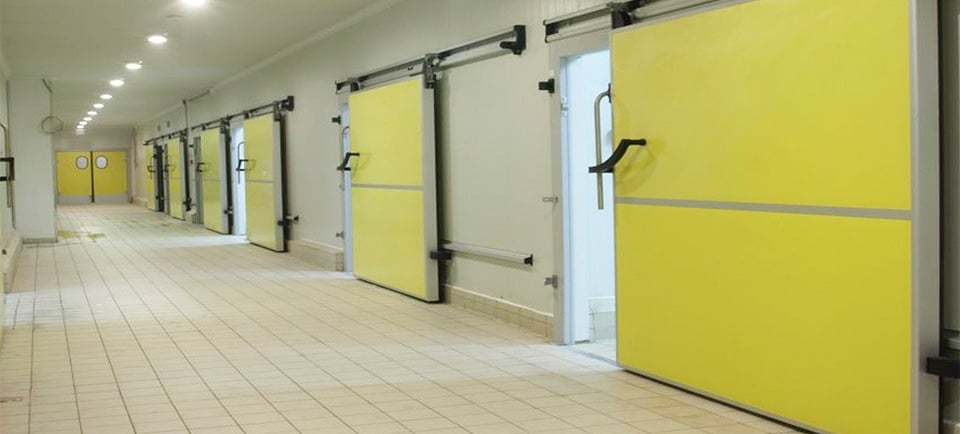
The primary function of insulation is to minimize energy loss. Modern cold rooms use high-performance materials like polyurethane (PUR) or polyisocyanurate (PIR) foam panels with very low thermal conductivity. Airtight construction is equally important; all joints, seams, and penetrations for pipes or cables must be meticulously sealed to prevent moisture ingress and thermal bridging. Exterior surfaces are often light-colored and smooth to reflect solar radiation.
2. Precision Temperature and Humidity Control Systems
Food items have vastly different preservation requirements. A versatile cold storage facility will feature multiple, independently controlled temperature zones:
Frozen Storage (-18°C to -25°C): For long-term storage of meat, seafood, and frozen meals.
Chilled Storage (0°C to 4°C): For dairy, fresh meat, and certain fruits and vegetables.
Controlled Atmosphere Storage: For produce, using precise gas mixtures to slow ripening.
Modern systems use IoT-enabled sensors and controllers that allow for remote monitoring and automatic adjustments, providing real-time alerts for any temperature deviations.
3. Robust and Efficient Refrigeration Technology
The heart of any cold room is its refrigeration system. Key considerations include:
Compressor Technology: Scroll or screw compressors are common for commercial applications, prized for their reliability and efficiency.
Low-GWP Refrigerants: In response to global environmental regulations, the industry is rapidly phasing out high Global Warming Potential (GWP) refrigerants like R-410A. Newer, eco-friendlier alternatives such as R-290 (propane) and R-744 (carbon dioxide) are becoming standard. These refrigerants require specialized handling by trained professionals.
Redundancy: Critical operations often incorporate backup compressors or dual-circuit systems to prevent catastrophic failure.
4. Intelligent Monitoring and Automation
"Smart" cold rooms are the new standard. Integration with Building Management Systems (BMS) or Warehouse Management Systems (WMS) allows for:
Predictive Maintenance: AI-driven systems analyze performance data to predict component failures before they happen, reducing downtime.
Energy Management: Systems optimize compressor run times, defrost cycles, and fan speeds based on real-time load and ambient conditions.
Full Traceability: Integration with inventory systems provides a complete, audit-ready record of a product's time-temperature history.
Cold Room Layout Strategies for Maximum Efficiency and Safety
An intelligent layout transforms a cold storage space from a simple box into a high-performance logistical asset.
1. Functional Zoning and Workflow Optimization
A well-planned cold room separates distinct operational areas to streamline workflow and prevent cross-contamination:
Loading/Unloading Bay: Temperature-controlled docks with rapid-roll doors and air curtains minimize cold air loss.
Pre-Cooling/Blast Chilling Area: Dedicated spaces for rapidly reducing the temperature of incoming goods before they enter main storage are now considered a best practice.
Main Storage Zones: Organized by product type and temperature requirement. Use clear, illuminated signage for safety and efficiency.
Picking/Packing Area: A slightly warmer zone (e.g., 10°C) where orders can be assembled without exposing workers to deep cold for extended periods.
2. Storage and Racking Configurations
The choice of storage system directly impacts capacity and accessibility.
Selective Pallet Racking: The most common and flexible system, offering direct access to every pallet.
Narrow-Aisle or Very-Narrow-Aisle (VNA) Racking: Uses specialized forklifts to reduce aisle width, increasing storage density by 30-50%.
Drive-In/Drive-Through Racking: High-density systems where forklifts drive into the rack structure. Ideal for large quantities of the same product but with lower stock rotation flexibility.
Mobile Pallet Racking: Racks are mounted on carriages that move on rails, eliminating permanent aisles and maximizing floor space utilization.
3. Safety and Ergonomics
Cold environments pose unique risks. A safe layout includes:
Non-slip, industrial-grade flooring that can withstand thermal contraction and heavy loads.
Wide, clearly marked aisles free of obstructions to allow safe equipment movement.
Emergency alarms and easily accessible exits that are not obstructed by storage.
Personnel safety zones and limits on continuous working times in low-temperature areas.
4. Future-Proof and Flexible Design
The best designs accommodate change. Modular construction allows for future expansion or reconfiguration of temperature zones. Layouts should also consider the potential integration of automation, such as Automated Guided Vehicles (AGVs) or robotic picking systems, by ensuring adequate space and infrastructure.
The Future of Cold Room Technology: 2026 and Beyond
The cold storage industry is on the cusp of a technological transformation focused on sustainability and intelligence.
Magnetic Refrigeration: An emerging, highly efficient technology that uses magnetic fields instead of refrigerant gases. While not yet widespread due to material costs, it represents a significant leap towards ultra-low-carbon cooling.
Photoplasma Sanitization: Integrated systems that use plasma technology to continuously sanitize interior air and surfaces, enhancing food safety and reducing manual cleaning labor.
Digital Twins and Advanced Simulation: Consultants and engineers are increasingly using digital twin technology to create virtual models of cold rooms. These models simulate energy use, airflow, and operational workflows to optimize the design before construction even begins, identifying potential inefficiencies and preventing costly mistakes.
Renewable Energy Integration: Cold rooms, with their large roof spaces and high energy demand, are ideal candidates for solar photovoltaic (PV) panel installations. Using solar power to offset compressor energy consumption is a rapidly growing trend that reduces operational costs and carbon footprint.
Ready to Design Your Optimal Cold Storage Solution?
Designing and building a cold room is a significant investment that impacts your daily operations for years to come. The complexities of modern refrigeration technology, building codes, and efficient spatial planning make professional consultation not just valuable, but essential.
Contact our team of expert cold storage consultants today for a free, no-obligation assessment. We can help you:
Analyze your specific food storage needs and workflow.
Develop a customized design and layout plan that maximizes efficiency and ROI.
Specify the latest, most reliable, and energy-efficient equipment.
Ensure your project is compliant with all relevant safety and environmental regulations.
Let's turn your cold storage vision into a high-performance reality. Get in touch now for a consultation.
Get in touch
HENGLIANG COOLING
We design, manufacture, and deliver integrated refrigeration solutions, including cold rooms, ripening room systems, and industrial chillers for global commercial and industrial applications.
SERVICES
Request a Customized Solution
© 2002-2026. All rights reserved.
Address
Xiamen, Fujian, China
Contacts
+86 18350573206
alan@xhllq.com