
Chicken Cold Room: Industry Guide for Processing and Blast Freezing
This industry guide explains how a chicken cold room supports safe processing, blast freezing, and storage, covering system design, temperatures, and applications.
1/2/20262 min read
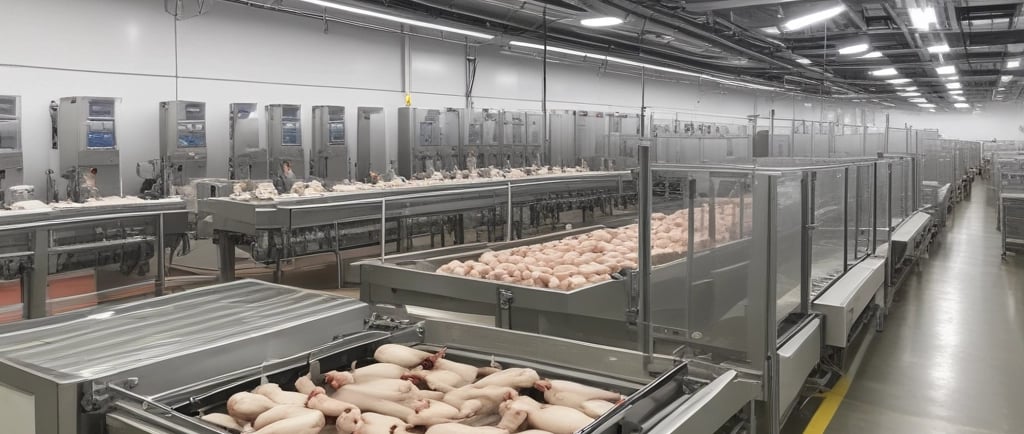
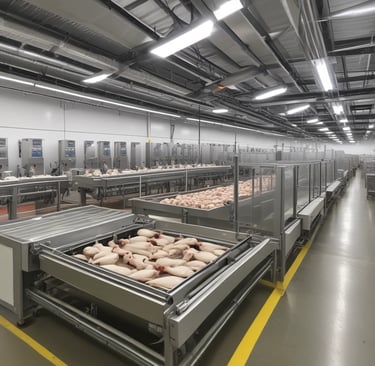
A chicken cold room is a critical infrastructure component in modern poultry processing facilities, designed to control temperature precisely during chilling, freezing, and storage stages. Unlike general-purpose cold storage, chicken-specific systems must address high moisture loads, strict hygiene requirements, and rapid throughput demands common in poultry slaughtering and processing lines.
This guide explains how chicken cold room systems work, how they integrate with chicken blast freezer solutions, and what B2B buyers should evaluate when planning cold room for chicken processing at industrial scale.
How a Chicken Cold Room Works in Poultry Processing
In poultry plants, cold rooms are positioned immediately after slaughter, evisceration, and portioning. The objective is to reduce core temperature quickly to inhibit bacterial growth while preserving texture and yield. A standard chicken cold room operates through coordinated control of refrigeration units, airflow systems, insulated panels, and automated monitoring.
Chicken blast freezer zones are often integrated upstream, rapidly pulling down product temperature before transfer to frozen storage areas. hengliangcooling typically designs these systems as connected temperature zones rather than isolated rooms, improving product flow and energy efficiency.
Core Features of Industrial Chicken Cold Room Systems
Chicken cold rooms differ from red meat storage due to higher surface moisture, lighter carcass weight, and faster spoilage risk. Key system features include corrosion-resistant evaporators, high air-change rates, and washable interior finishes.
Key Functional Characteristics
Rapid pull-down capability for freshly processed chicken
Even airflow distribution to avoid partial freezing or hot spots
Hygienic design supporting daily washdown routines
Precise temperature and humidity control for different poultry stages
hengliangcooling applies modular panel construction and customized airflow layouts to adapt systems for whole chickens, cut portions, or tray-packed poultry products.
Temperature Requirements for Chicken Processing and Storage
Different processing stages require different temperature ranges to balance food safety and operational efficiency. These ranges are critical selection criteria for B2B buyers planning a cold room for chicken processing.
Typical System Configuration for Chicken Cold Rooms
A complete chicken cold room solution usually consists of insulated enclosures, refrigeration units, control systems, and safety accessories. When blast freezing is required, high-capacity air coolers and fast-response compressors are added upstream.
hengliangcooling often supports multi-room layouts combining pre-chill rooms, chicken blast freezer chambers, and frozen storage rooms into one integrated system.
Key Technical Parameters you Should Evaluate
When sourcing a chicken cold room, procurement teams should focus on parameters that directly affect throughput, compliance, and operating cost:
Cooling capacity matched to kg/hour poultry output
Air velocity appropriate for poultry carcass geometry
Panel insulation thickness based on target temperature
Defrost method compatible with high humidity environments
Control accuracy for HACCP documentation
These factors influence not only initial investment but also long-term reliability and energy efficiency.
Main Application Scenarios
Chicken cold room systems are widely used across the poultry value chain, including:
Slaughterhouses and primary poultry processing plants
Chicken portioning and deboning facilities
Poultry export processing centers
Central kitchens and large-scale food manufacturers
Each scenario requires different temperature zoning and automation levels, which is why system customization is essential.
FAQ: Chicken Cold Room and Blast Freezing
What is the difference between a chicken cold room and a chicken blast freezer?
A chicken cold room maintains stable temperatures for storage, while a chicken blast freezer rapidly reduces product temperature to freeze chicken safely and uniformly.
Can one system handle both chilling and freezing?
Yes, but most industrial facilities use separate zones to optimize efficiency and product quality.
How fast should chicken be frozen after processing?
Ideally within hours of slaughter or cutting to minimize microbial growth and moisture loss.
Call to Action
If you are planning or upgrading a chicken cold room or chicken blast freezer system, hengliangcooling can support you with customized system design, integrated refrigeration solutions, and proven project execution experience. Contact hengliangcooling to discuss your processing capacity, temperature requirements, and receive a tailored technical proposal with budgetary guidance.
Phone
86 18350573206
alan@hengliangcooling.com
HENGLIANG COOLING
We design, manufacture, and deliver integrated refrigeration solutions, including cold rooms, ripening room systems, and industrial chillers for global commercial and industrial applications.
SERVICES
Request a Customized Solution
© 2002-2026. All rights reserved.
Address
Xiamen, Fujian, China
Contacts
+86 18350573206
alan@xhllq.com